


Quizzy Journey - Quiz&Earn
4.596.00 Reviews
App Specs
- Version
- 1.0.4
- Updated On
- License
- Free
- Downloads
- 10,000+
- Developer
- InventBros
- Categories
- Trivia
- Platform
- Android
Screenshots




 Analysis by AppCompare
I spent time with Quizzy Journey as a lightweight trivia game, and its central appeal is easy to understand: it turns short bursts of general-knowledge questions into a simple, reward-oriented activity. The experience is aimed at people who want something more relaxed than a serious quiz platform, but still want a reason to keep answering one question after another. InventBros presents it as an accessible game rather than a demanding study tool, and that distinction matters when deciding whether it belongs on your phone.
My first impression was that the game is built around low commitment. You can approach it when you have a few spare minutes, answer what you know, laugh at the questions that catch you off guard, and move on without needing to prepare. That makes it a natural fit for a queue, a coffee break, or a casual evening with friends. The store summary describes the experience as fun and easy trivia with rewards, and in practice the important word is “easy”: this is designed to keep participation comfortable rather than make every round feel like an examination.
It is free to play, which removes the most obvious barrier for curious users. The game has a mature seventeen-plus content rating, so I would not treat it as a family quiz for younger children. It also has a 4.5 average from around 420 ratings, with roughly 96 written reviews, and has passed the 10K-install mark. Those figures suggest that it has found an audience, while the written feedback is still small enough that I would judge it mainly by the kind of play it offers rather than by popularity alone.
Why the reward-focused trivia loop matters
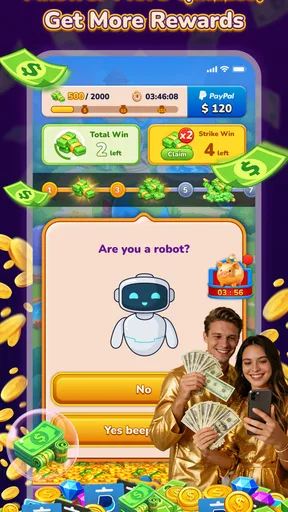
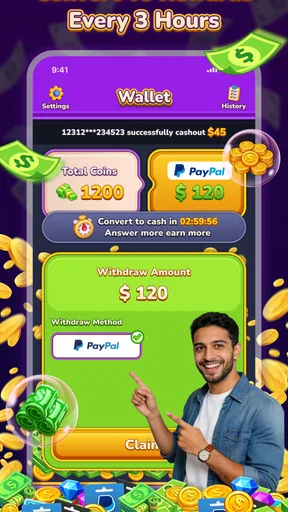
The most important capability here is not simply asking questions; it is giving ordinary trivia answers a sense of immediate purpose. Many quiz games rely entirely on curiosity or competition. Quizzy Journey adds the feeling that each correct response contributes to a reward-driven journey, which can make a short session feel more satisfying than a disconnected list of questions.
That design works best for players who need a little motivation to return. I often find that a conventional trivia app is enjoyable for a few rounds and then becomes something I forget about. A reward-centered loop gives the session a clearer shape: start, answer, see how you did, and decide whether to continue. Even when the questions are not especially difficult, that rhythm can make the game feel more active.
There is also a useful psychological difference between “testing yourself” and “collecting progress.” If I open a traditional quiz game, I may worry about getting obscure answers wrong. Here, the lighter tone makes mistakes easier to accept. The point is less about proving expertise and more about staying engaged. That is a real strength for casual users, especially anyone who normally avoids trivia because competitive scoring feels intimidating.
At the same time, the reward idea should not be mistaken for a substitute for deep content. I would not use this as a structured learning course, a revision system, or a dependable way to master a subject. Its value comes from making general knowledge entertaining and repeatable. If your main goal is academic preparation, a focused flashcard tool or subject-specific quiz platform will usually be more useful.
Worth Reading Before You Choose

EA SPORTS FC Mobile 26 Is a Bigger Football Game, but It Takes Time

Flipboard Shows What News Apps Must Do Beyond the Feed

Switching to Android Auto Means Rethinking Your Driving Routine

Google Calendar Makes a Crowded Week Easier to Manage

Ludo King Makes the Most of the Minutes Between Plans

Baby Panda World Brings Quick Play to Modern Phones, but Its Game Library Feels Busy
What a short session feels like
In everyday use, I would treat each play session as a small mental reset. The questions give me something to concentrate on without demanding the long attention span of a strategy game. The best moments come when a question looks obvious, I answer too quickly, and the result reminds me that general knowledge is full of traps. That combination of confidence, surprise, and occasional laughter is more important to the experience than raw difficulty.
The game’s short-form nature also makes it suitable for shared play in an informal setting. A friend can read a question aloud, everyone can guess, and the result becomes a conversation starter. It is not the same as a dedicated multiplayer party game, and I would not choose it when I need elaborate group rules or a large competitive event. Still, its simple trivia format can work well when people want something to do together without learning a complicated system first.
One practical tip is to avoid judging the game after a single lucky or unlucky run. Trivia results depend heavily on subject familiarity. A player who knows entertainment and everyday facts may feel very comfortable, while someone expecting specialist history or science questions may find the content less aligned with their interests. I recommend using several short sessions to decide whether the question mix suits you instead of treating one round as a complete verdict.
Using the reward loop without letting it take over
The reward structure is most useful when I set a small stopping point before playing. For example, I might decide to complete one brief session during a break rather than continue automatically. This keeps the game in its strongest role: a quick diversion with a little extra motivation. Without that boundary, any reward-based design can encourage me to keep tapping simply because the next result feels close.
I also find it helpful to focus on the questions themselves rather than treating every reward as a promise of value. The enjoyable part is the combination of knowledge, surprise, and progress. If a player becomes interested only in the reward outcome, the trivia may start to feel like a chore. That is not a flaw unique to this title, but it is an important trade-off in a game built around earning-oriented motivation.
Because the game is free, it is easy to try without making a financial commitment. That is particularly useful for users who want to compare it with other trivia options before settling on one. I would still approach any reward claim with ordinary caution and read the in-game wording carefully. A free game can be enjoyable on its own terms, but I would not install it solely because I expect the reward element to replace a source of income or deliver guaranteed real-world value.
A realistic everyday scenario
Imagine finishing work with ten minutes before an appointment. You do not have enough time to start a story-driven game, and scrolling through social media feels repetitive. Quizzy Journey fits that gap because the commitment is small: open it, answer a few questions, and stop when it is time to leave. The reward-oriented progress gives the break a little structure, while the trivia keeps your attention more actively than passive scrolling.
Another useful situation is a quiet evening when two people want a casual activity but do not want to set up a board game. One person can play while the other comments on the answers, or both can compare their instincts informally. The game is better for spontaneous interaction than for a carefully organized quiz night. Its low barrier is an advantage, but its simplicity also means it may not provide enough depth for a group that wants teams, detailed scoring, or a host-led format.
The important trade-offs before installing
The first limitation is depth. An easy trivia game can be welcoming, but experienced quiz fans may quickly want harder questions, more specialized categories, or stronger control over the content. If you enjoy researching why an answer is correct, building custom quizzes, or tracking detailed subject performance, a more educational alternative will likely serve you better.
The second trade-off is the balance between entertainment and repetition. A short question loop is convenient, yet convenience can become predictability if the available material does not keep feeling fresh for you. I would choose this game for casual variety rather than for a long-term mastery challenge. Players who need a constantly escalating difficulty curve should compare it with a dedicated competitive trivia app before making it their main choice.
The mature seventeen-plus rating is another practical consideration. I would check that it is appropriate for the person using the device, particularly if a child might borrow the phone. The rating also changes the audience I would recommend: this is better framed as an adult casual game than as a safe default for all ages.
Device compatibility is relatively broad because the game supports Android version 7.0 and later. That makes it accessible to people who are not using a recent phone, although compatibility alone does not guarantee that every device will feel equally comfortable. On a smaller or older handset, I would pay attention to readability and responsiveness during the first session rather than assuming the experience will be identical everywhere.
The current release is version 1.0.4. For me, that places the game in an early stage where the basic loop matters more than a large ecosystem of established extras. I would install it expecting a straightforward trivia experience, not a mature platform with years of accumulated modes and deep personalization. That expectation makes the game easier to appreciate on its own terms.
How it compares with familiar trivia alternatives
Compared with a conventional quiz app that emphasizes scores and leaderboards, this game feels more approachable because the reward journey gives casual answers a reason to matter. A leaderboard-focused alternative is better when I want direct competition, public comparison, or a clear push to improve my ranking. Quizzy Journey is the better fit when I want the activity to remain relaxed and personal.
Compared with educational flashcards, it is more entertaining but less dependable for retention. Flashcards are designed around deliberate repetition and usually make it easier to target one subject. This game is better when I want broad, informal knowledge and a lighter mood. I would not replace a study routine with it, but I could use it as a pleasant warm-up before more focused learning.
Compared with a party trivia game, it has a lower setup cost. I do not need to organize teams or explain many rules before starting. The compromise is that it may not create the same sense of occasion. For a spontaneous break, that is exactly what I want; for a planned gathering, a dedicated multiplayer title may produce more memorable group energy.
Compared with a puzzle game, the appeal is more social and knowledge-based than mechanical. I am not solving a visual grid or mastering a complex control scheme. The challenge comes from recognition, memory, and judgment under a little pressure. That makes it suitable for players who want mental activity without learning new game mechanics.
Who gets the most from this particular design
I would recommend it most strongly to casual players who enjoy general knowledge but do not want a harsh competitive environment. It also suits people who like games that can be opened and closed quickly, and users who appreciate a reward-oriented reason to keep answering. If you are looking for a free way to fill small gaps in the day, the combination is convincing.
It can also work for someone returning to trivia after a long break. The accessible tone lowers the pressure to perform, and the short sessions make it easier to rebuild confidence. My advice would be to treat wrong answers as prompts to stay curious rather than as evidence that the game is not for you. The experience is at its best when I allow myself to guess and enjoy being surprised.
I would be more cautious about recommending it to serious quiz competitors, students seeking measurable progress, or players who need extensive customization. Those users may prefer a platform with deeper statistics, subject controls, formal multiplayer, or a more demanding difficulty system. Likewise, anyone uncomfortable with reward-centered engagement should choose a simpler trivia app where the questions are the entire focus.
InventBros has made a game that understands the appeal of small, repeatable moments. Its strongest idea is the way reward-oriented progress changes the feeling of an easy question: answering correctly is not only a tiny test of knowledge but also a reason to continue the journey. The real strength is motivation, not academic depth. That distinction explains both why I enjoyed it and where I would draw the line.
After using it, I see Quizzy Journey as a good companion for breaks, casual conversations, and players who want trivia without a heavy competitive atmosphere. The free entry point, broad Android support, and approachable style make it easy to try. The mature age rating, early version status, and likely limits in depth mean I would not present it as a universal quiz solution. For the right user, though, it turns spare minutes into a pleasant little routine, and that is a worthwhile achievement for a simple trivia game.
Pros
- Quick quizzes make it easy to play during short breaks.
- Covers multiple topics
- keeping the experience varied.
- Simple interface is approachable for casual players.
- Progress and rewards can make repeated play more engaging.
- Lightweight gameplay is suitable for most modern phones.
Cons
- Reward values may feel low compared with the time required.
- Some questions may be too easy for experienced quiz fans.
- Ads can interrupt the flow between quizzes or rewards.
- Internet access may be needed for certain features.
- Question quality and variety may vary across categories.
FAQs for Quizzy Journey - Quiz&Earn
What is Quizzy Journey - Quiz&Earn?
Quizzy Journey - Quiz&Earn is a trivia-style mobile game that combines general-knowledge questions with a reward-focused progression system. Players typically answer quizzes across different topics, collect points or in-game rewards, and advance through stages or challenges. The experience is designed for casual play, although the exact question categories, reward structure, and available features may vary depending on the app version and region.
Can I really earn money or prizes by playing Quizzy Journey?
The app’s name suggests that quizzes may provide opportunities to earn rewards, but users should read the current terms, withdrawal rules, and eligibility requirements carefully before investing significant time. Rewards may be points, virtual items, gift cards, or other benefits rather than guaranteed cash. Minimum balances, supported countries, verification steps, advertisements, and limited redemption options can also affect the actual value.
Is Quizzy Journey - Quiz&Earn free to download and play?
Quizzy Journey - Quiz&Earn may be available as a free download, allowing users to begin playing without an upfront purchase. However, free quiz apps commonly include advertising, optional purchases, energy systems, or other limitations. Before downloading, check the store listing for in-app purchase information, supported devices, subscription details, and whether any features or reward-related activities require payment.
Does Quizzy Journey require an internet connection?
An internet connection is likely needed for important parts of Quizzy Journey, such as loading questions, synchronizing progress, displaying advertisements, updating reward balances, and processing redemptions. Some content might appear to work temporarily offline, but uninterrupted access should not be assumed. If you plan to play while traveling, confirm the app’s offline capabilities and be aware of mobile-data usage.
What permissions and personal information does the app request?
Before installing Quizzy Journey - Quiz&Earn, review its privacy policy and the permissions shown on the Google Play Store or Apple App Store. A quiz-and-rewards app may collect information such as device identifiers, usage activity, advertising data, or account details, particularly when rewards or withdrawals are involved. Only provide payment or identity information through clearly documented, secure, and official in-app processes.


